

Pour transformer l'ambition en décision robuste, il s'agit de comparer des options par coûts complets (investissement, exploitation, maintenance), bénéfices (santé, confort, risques évités), contraintes réglementaires et capacités de mise en œuvre. Ainsi des trajectoires "no-regrets" deviennent possibles, des montages et phasages finançables, la sobriété matérielle et la circularité sont intégrées, en vue de dossiers prêts à arbitrer, budgéter et lancer.
Pour relier décarbonation, confort de vie et faisabilité technique, il s'agit d'évaluer enveloppes, structures, matériaux, sobriété d'usage, systèmes énergétiques et potentiel local (rénovation, électrification, réseaux, géothermie), avant de proposer des options chiffrées et phasées. La circularité est privilégiée au prisme de l'empreinte carbone (embarquée et/ou opérationnelle), selon des critères de performance transparents et évolutifs.
Le vivant désigne une infrastructure prioritaire pour les territoires urbanisés. Suite au diagnostique des habitats, continuités écologiques, sols, eau, espèces et pressions (chaleur, fragmentation, entretien), il s'agit de conçevoir des trames vertes et bleues résilientes, constituées de sols fertiles, végétation adaptée, refuges écologiques, souvent issus de renaturation, ainsi que des formats de gestion différenciée. Entre biodiversité, confort humain et services écosystémiques, nous établissons de nouveaux principes de priorisation.
L'alignement des acteurs rapproche les décisions de la mise en œuvre. Les dispositifs de concertation sont rendus utiles (pas symboliques), les rôles clairs, les responsabilités attribuées et les arbitrages efficaces, pour faire converger l'acceptabilité et les récits de projet. La coopération multi-acteurs bien organisée, sécurise l'opposabilité et le suivi, et transforme la complexité sociale en conditions concrètes de réussite, du diagnostic jusqu'au déploiement.
Une solution a vocation à se transformer en programme réplicable à grande échelle, et une stratégie en cahiers des charges, critères de performance, clauses de maintenance et phasage, prépare consultations et marchés-cadres. La continuité opérationnelle est garantie grâce à une chaine insécable pilote→standard→échelle, coordonnée entre partenaires et services, et mise en place grâce à des indicateurs de suivi pour un déploiement rapide et durable.
En tant que ressources vitales, l'eau et le sol demandent à être cartographiés selon leurs qualités physico-chimiques et autres paramètres (flux, infiltration, stockage, perméabilité, qualité et vulnérabilités), pour concevoir des réponses adaptées aux contextes locaux : désimperméabilisation, sols vivants, gestion à la source, renaturation, trames bleues-vertes-jaunes, synergies eau-énergie (dont géothermie), selon des indicateurs, du phasage et des conditions de déploiement.
La transition deviant pilotable si les données et les mesures (climat, usages, sols, énergie) construisent la baseline protocoles de mesure (avant/après) pour évaluer confort, risques, coûts évités et impacts carbone. Ainsi les données informant des decisions, des arbitrages comparables, des preuves, du suivi de déploiement et une amélioration continue.
Pour transformer l'espace public en infrastructure d'habitabilité, nous analysons les conditions climatiques locales (chaleur, ombre, vent, humidité, matériaux) pour y adapter les usages du quotidien, grâce à des dispositifs sobres et robustes, mesurables, réplicables et déployables à l'échelle de la rue au quartier.
Christian
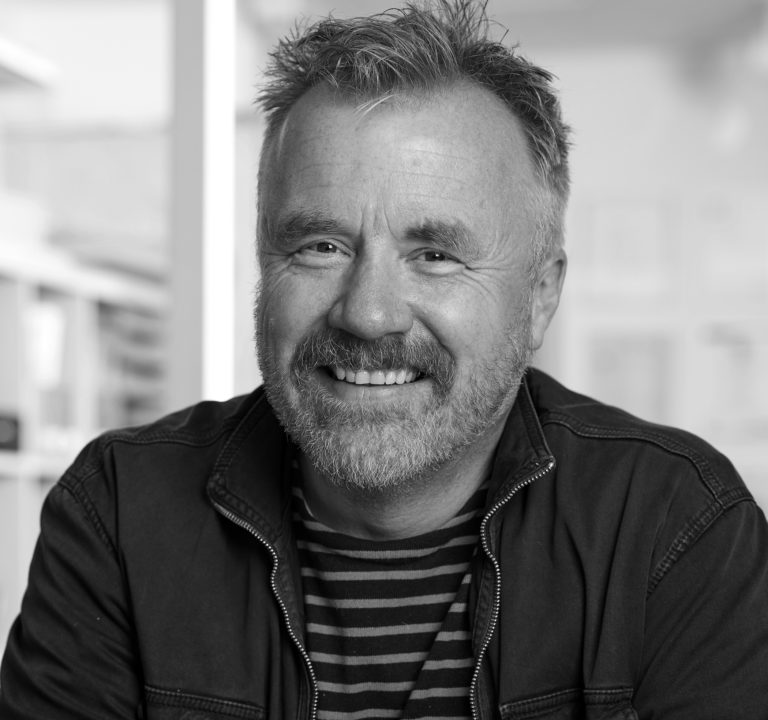
Duncan
Baker-Brown
Architect FRSA ARB RIBA, Academic & Environmental Activist, Founder at BakerBrown
Climate Literacy Champion, School of Architecture and Design - University of Brighton
Duncan Baker-Brown BSc. DipArch FRSA ARB RIBA
Founder of BakerBrown, Climate Literacy Champion at the School of Architecture & Design University of Brighton
Member of RIBA Council, ACAN, Architects Declare, Member of Brighton & Hove City Circular Economy Oversight Board
Duncan is a practicing architect, academic and environmental activist. Author of ‘The Re-Use Atlas: a designer’s guide towards a circular economy’, he has practised, researched, and taught around issues of sustainable development and closed-looped systems for more than 25 years. He recently founded BakerBrown, an architectural
practice and consultancy created to address the huge demands presented by the climate and ecological emergency as well as the challenges of designing in a post-COVID world. Over the years Duncan’s practices have won numerous accolades including RIBA National Awards and a special award from The Stephen Lawrence Prize for the Brighton Waste House - the prize money has since been used to set up a student prize for circular, closed loop design at the University of Brighton where Duncan teaches.
Duncan has worked on projects as diverse as 'The Greenwich Millennium Village' in London, the RIBA’s ‘House of the Future’, the multi-award-winning ‘Brighton Waste House’ and recently he designed a new building for Glyndebourne Opera that will be constructed from waste flows and organic materials grown on site. Duncan is currently working on schemes for Net-Zero Carbon social housing with Brighton & Hove District Council, where he has recently lead on the drafting of their soon to be published Circular Economy Route Map.
Duncan is currently the Principal Investigator for two EU Interreg research programmes focussing on the re-use of construction waste, building deconstruction and reconstruction. He is curating a summer school for August 2021 that will be based in Brighton. It will ask teams of students from across Northern Europe to focus on reworking material from de-constructed buildings in the neighbourhood. Called the ‘School of Re-construction’, Duncan is working on this project with Rotor DC from Brussels, Bellastock from Paris, together with Brighton & Hove City Council.
Duncan is an experienced public speaker. He also author’s academic papers, curate’s exhibitions and symposia, and host’s workshops in the UK, Europe and on occasion further afield. These events test ideas relating the important role the built environment has in contributing positively towards the existential challenge the Climate and Ecological Emergency present all sections of society, especially the disenfranchised.
Guest expert at the Transition Workshop since 2021.
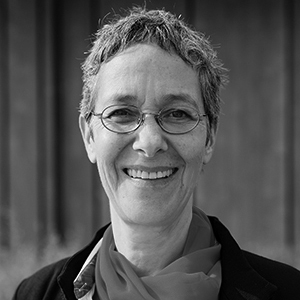
Claudia R.
Binder
Doyenne de la faculté Environnement Naturel, Architectural et Construit (ENAC) – EPFL
Professeure ordinaire, Laboratoire de relations humaines-environnementales dans les systèmes urbains
Claudia R. Binder, citoyenne suisse, canadienne et colombienne, est diplômée de l'ETH Zurich en biochimie puis a fait un doctorat en sciences de l'environnement. Elle est également titulaire de la Chaire La Mobilière sur l'écologie urbaine et le mode de vie durable. Ses recherches portent sur l'analyse, la modélisation et l'évaluation de la transition des systèmes urbains vers la durabilité. Ses recherches portent sur l'alimentation, l'énergie, les modes de vie et les transports durables dans les systèmes urbains. À l'EPFL, Claudia Binder est la directrice académique de Design Together, une initiative d'enseignement interdisciplinaire. Elle a été nommée à la tête du groupe de travail sur la stratégie énergie et développement durable de l'EPFL en 2019.
Depuis 2020, Claudia Binder participe au Transition Workshop en tant que doyenne de l'ENAC-EPFL ainsi qu'en tant que experte invitée.
Dean of the Natural, Architectural and Built Environment faculty (ENAC) - EPFL
Full Professor, Laboratory of Human-Environmental Relations in Urban Systems
Claudia R. Binder, a Swiss, Canadian and Colombian citizen, She studied at ETH Zurich a degree in biochemistry and then a PhD in environmental sciences. She also holds the La Mobilière Chair on Urban Ecology and Sustainable Living. Her research involves analyzing, modelling and assessing the transition of urban systems towards sustainability. Her research focuses on food, energy, and sus-tainable living and transport in urban systems. At EPFL, Binder is the academic director of Design Together, a cross-disciplinary teaching initiative. She was appointed as head of the working group on EPFL’s energy and sustainability strategy in 2019.
Since 2020, Claudia Binder has participated in the Transition Workshop as dean of ENAC-EPFL as well as as a guest expert.

Hélène
Bougouin
Hélène Bougouin étudie et accompagne les microfermes au sein du FiBL (institut de recherche de
l’agriculture biologique). Permacultrice diplômée, passionnée par la transmission, elle enseigne la
permaculture depuis 2016 avec un accent particulier sur la transition du milieu agricole romand.
Elle s’occupe également pour le FiBL des aspects d’analyse économique du projet BioDiVerger, qui
suit depuis 2013 un verger agroforestier et un jardin forêt sur les terres du service de l’agriculture
vaudois, à Morges.
Hélène Bougouin studies and accompanies microfarms within the FiBL (research institute of biological agriculture). A qualified permaculturist, passionate about transmission, she teaches permaculture since 2016 with a particular focus on the transition of the agricultural environment in French-speaking Switzerland. She is also responsible for the economic analysis aspects of the BioDiVerger project for FiBL, which since 2013 follows an agroforestry orchard and a forest garden on the lands of the agricultural service Vaudois, in Morges.
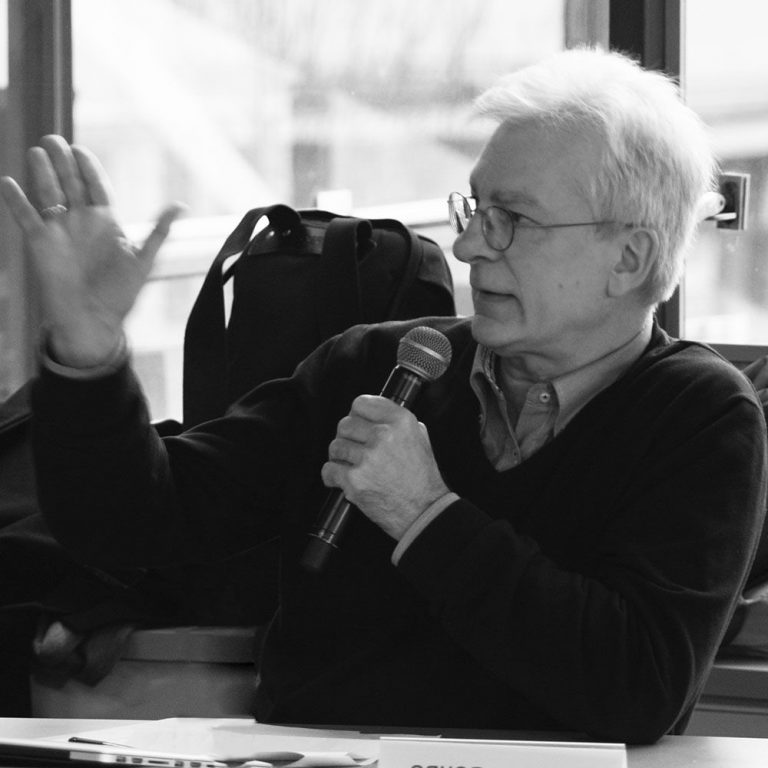
Dominique
Bourg
Philosophe, professeur honoraire - Institut de géographie et durabilité, Faculté des géosciences et de l’environnement, Université de Lausanne.
Membre du Conseil scientifique Eco-Century Project, Dominique Bourg a participé à de nombreux événements de la Fondation Braillard Architectes, tels que Dessiner la transition I et est expert invité aux Transition Workshop.
Philosopher, Honorary Professor - Institute of Geography and Sustainability, Faculty of Geosciences and Environment, University of Lausanne.
A member of the Eco-Century Project Scientific Council, Dominique Bourg has participated in numerous Fondation Braillard Architectes events, such as Designing Transition I and is a guest expert at the Transition Workshop.
Contributions
15 février 2024, 18:00 - 20:00
Débat de Genève 2024
Débat entre des experts de la transition écologique sur le futur de Genève
15 décembre 2022
Séminaire de Genève 2022
Revoir la journée de séminaire sur le Transition Workshop 22, les territoires en transition et l'anniversaire de la FBA.
15 décembre 2021 - 31 janvier 2022
Séminaire de Genève 2021
Revoir la présentation des résultats des Transition Workshop et de la consultation internationale Luxembourg in Transition
15 décembre 2021, 00:00 - 23 juillet 2022, 00:00
Transition Workshop 2022 | Candidatures
Formation théorique et pratique à la transition écologique des villes
01 juin 2021, 00:00 - 23 juillet 2021, 00:00
Transition Workshop 2021
Infos & Candidatures au workshop de la transition qui se tiendra à Genève du 1.06.21 au 9.7.21 en distanciel et du 12.7.21 au 23.7.21 en présentiel.
24 septembre 2020 - 31 décembre 2020
Le futur du Grand Genève. Sept scénarios de transition écologique
Présentation finale de la Consultation du Grand Genève.
10 septembre 2020 - 01 décembre 2020
Dessiner la transition – le livre
Livre issu de la série de conférences Dessiner la transition – année 1
13 juillet 2020 - 24 juillet 2020
Transition Workshop 2020
La FBA et ses partenaires lancent le premier workshop expérimental sur la transition écologique des villes, destiné aux professionnels de l’espace, acteurs et étudiants.
22 avril 2020, 19:00 - 30 avril 2020, 00:00
De l’Athénée à la transition: les villes comme berceau de l’imagination transformatrice
De l’Athénée à la transition: les villes comme berceau de l’imagination transformatrice L’Athénée genevois (dont les fondations hébergent… la Fondation Braillard Architectes) porte un nom pas tout à fait anodin....
LIRE PLUS
26 mars 2020, 17:00 - 19:00
Dessiner la transition, c’est maintenant! #1
Visio-débat: En ces temps prégnants de grands changements et dans le cadre de la série Dessiner la Transition, la Fondation Braillard Architectes, Metrolab.Brussels et le LASUR/EPFL vous invitent à une...
LIRE PLUS
03 juillet 2019, 09:00 - 17:00
2e dialogue intermédiaire
Lors de cette journée, les 7 équipes de la Consultation sur le Grand Genève rencontraient pour la deuxième fois les experts. Après une présentation succincte de leurs projets à l’ensemble...
LIRE PLUS
11 décembre 2018, 09:00 - 17:30
1er séminaire de coordination
Présentation publique des 7 équipes Le 11 décembre 2018, au Pavillon Sicli, s’est déroulé le 1er Séminaire de coordination, organisée par la Fondation Braillard Architectes et les partenaires de...
LIRE PLUS
14 juin 2018, 16:00 - 05 juin 2018, 20:00
Dessiner la transition — Année 1: Bilan et perspectives
Programme de la séance de clôture Partie 1 RAPPEL DES CINQ SÉANCES Hélène Gallezot, Fondation Braillard Architectes LA TRANSITION: QUESTION DES VALEURS Panos Mantziaras, Fondation Braillard Architectes Premier...
LIRE PLUS
25 janvier 2018, 16:00 - 20:00
Dessiner la transition | L’Anthropocène comme horizon de projet
Écouter le séminaire (emission radio ) Programme Introduction au cycle L’ANTHROPOCÈNE COMME HORIZON DE PROJET Bernard Declève, Metrolab Brussels DU RENOUVELLEMENT À LA TRANSITION URBAINE: LE DÉFI DU...
LIRE PLUS
30 novembre 2017, 09:00 - 18:00
Le Séminaire de Genève 2017
Brochure de présentation des projets LE CONTEXTE La COP21 de décembre 2015 à Paris a conclu par un accord historique sur les mesures à prendre face au réchauffement...
LIRE PLUS
08 décembre 2016, 09:00 - 18:00
Le Séminaire de Genève 2016
LE CONTEXTE La COP21 de décembre 2015 à Paris a conclu par un accord historique sur les mesures à prendre face au réchauffement climatique. Elle a précisément pointé le...
LIRE PLUS
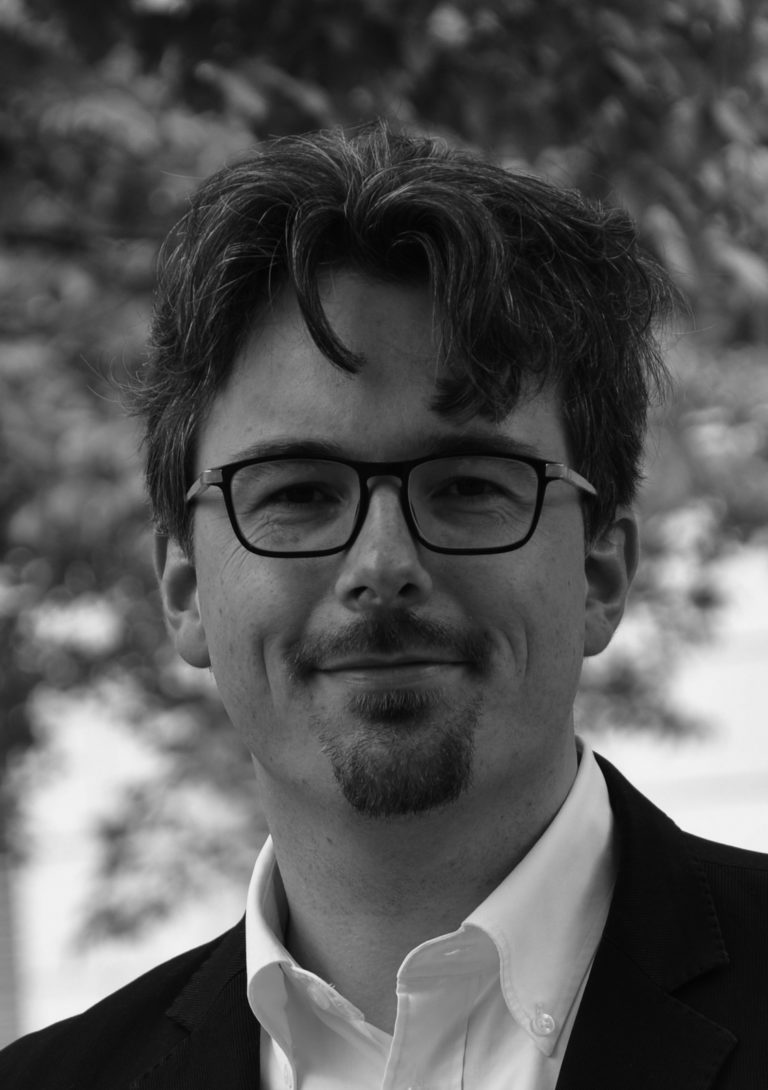
Tobias
Brosch
Professeur associé – Consumer Decision and Sustainable Behavior Lab – Université de Genève
Associate Professor – Consumer Decision and Sustainable Behavior Lab – University of Geneva
Sisse
Canguilhem
Carmen
De Jong
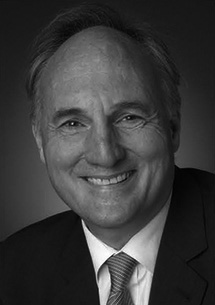
Peter
Droege
Peter Droege directs the Liechtenstein Institute for Strategic Development, the global advisory and research organization for the rapid transition to regenerative communities, cities, regions and infrastructure. Professor Droege serves also as President of Eurosolar, the European Association for Renewable Energy, and as General Chairman, World Council for Renewable Energy.
A recipient of the European Solar Prize in Education, Peter Droege initiated the Chair for Sustainable Spatial Development at the University of Liechtenstein while holding a Conjoint Professorship at the Faculty of Engineering, School of Architecture and the Built Environment, University of Newcastle, Australia. An inaugural member of the Zayed Future Energy Prize jury and Expert Commissioner for Cities and Climate Change for the World Future Council he also served on the Steering Committee of the Urban Climate Change Research Network hosted at Columbia University's Goddard Institute for Space Studies and CUNY. He has taught and researched at the Massachusetts Institute of Technology's School of Architecture and Planning, at Tokyo University as Endowed Chair in Urban Engineering at the Research Center for Advanced Science and Technology, and as Lend Lease Chair of Urban Design at the University of Sydney.
Professor Droege has authored or edited numerous books, including Intelligent Environments (Elsevier 1997), Urban Energy Transition, 1st Edition: From Fossil Fuels to Renewable Power (Elsevier 2008), The Renewable City (Wiley 2006), 100% Renewable - Energy Autonomy in Action (Earthscan 2009 and Routledge 2014), Climate Design (ORO Editions 2010), Regenerative Region: Lake Constance Energy and Climate Atlas (oekom verlag 2014), Regenerative Räume (oekom verlag 2017), Urban Energy Transition 2 - Renewable Strategies for Cities and Regions (2918), Intelligent Environments - Advanced Systems for a Healthy Planet (2022) and Urban Agriculture and Regional Food Systems.
Contributions
Keynote speaker du Transition Workshop 2020
Membre de l'équipe Projet Atlas du Séminaire de Genève 2016–2017
15 décembre 2021 - 31 janvier 2022
Séminaire de Genève 2021
Revoir la présentation des résultats des Transition Workshop et de la consultation internationale Luxembourg in Transition
15 décembre 2021, 00:00 - 23 juillet 2022, 00:00
Transition Workshop 2022 | Candidatures
Formation théorique et pratique à la transition écologique des villes
01 juin 2021, 00:00 - 23 juillet 2021, 00:00
Transition Workshop 2021
Infos & Candidatures au workshop de la transition qui se tiendra à Genève du 1.06.21 au 9.7.21 en distanciel et du 12.7.21 au 23.7.21 en présentiel.
10 décembre 2020, 17:00 - 31 juillet 2021, 00:00
TEDx Countdown | The Architecture of Transition
Les vidéos sont en ligne! Retrouvez les conférences TEDx Countdown de la FBA avec les équipes du Grand Genève.
13 juillet 2020 - 24 juillet 2020
Transition Workshop 2020
La FBA et ses partenaires lancent le premier workshop expérimental sur la transition écologique des villes, destiné aux professionnels de l’espace, acteurs et étudiants.
30 novembre 2017, 09:00 - 18:00
Le Séminaire de Genève 2017
Brochure de présentation des projets LE CONTEXTE La COP21 de décembre 2015 à Paris a conclu par un accord historique sur les mesures à prendre face au réchauffement...
LIRE PLUS
08 décembre 2016, 09:00 - 18:00
Le Séminaire de Genève 2016
LE CONTEXTE La COP21 de décembre 2015 à Paris a conclu par un accord historique sur les mesures à prendre face au réchauffement climatique. Elle a précisément pointé le...
LIRE PLUS
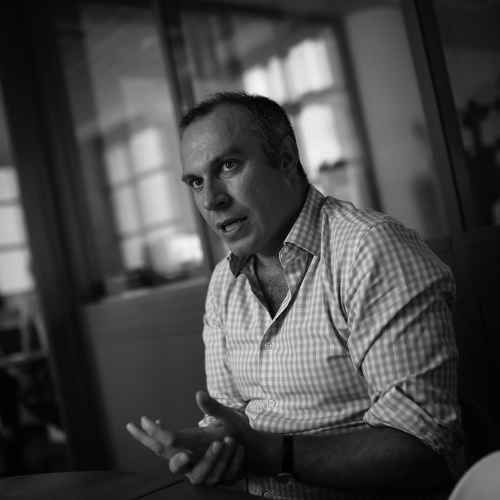
François
Gemenne
Spécialiste de la gouvernance du climat et des migrations, directeur de l’Observatoire Hugo à l’université de Liège, enseignant à Sciences-Po et à la Sorbonne
FR (2020)
Spécialiste des questions de géopolitique de l’environnement et des migrations, François Gemenne est chercheur qualifié du FNRS à l’Université de Liège (Belgique), où il dirige l’ Observatoire Hugo. Il est auteur principal pour le GIEC, et enseigne également les politiques du climat et les migrations internationales dans plusieurs universités, notamment à Sciences Po Paris et à la Sorbonne.
Ses recherches sont essentiellement consacrées à la gouvernance internationale des migrations et du changement climatique. Il a beaucoup travaillé sur les déplacements de populations liés aux dégradations de l’environnement, sur les politiques d’adaptation au changement climatique, ainsi que sur les politiques d’asile et d’immigration. Il a effectué de nombreuses études de terrain : à La Nouvelle-Orléans après l’ouragan Katrina, dans l’archipel de Tuvalu, en Chine, au Kirghizstan, aux Maldives, à l’île Maurice et au Japon après la catastrophe de Fukushima.
Il coordonne actuellement deux importants projets de recherche européens : MAGYC, qui porte sur la gouvernance des migrations et la crise de l’asile, et HABITABLE, qui porte sur les migrations liées au changement climatique. Il a également coordonné le projet DEVAST, un des premiers projets internationaux consacrés à l’étude des conséquences politiques et sociales de la catastrophe de Fukushima. En outre, il a participé à de nombreux projets de recherches internationaux consacrés à ces questions, notamment les projets EACH-FOR, HELIX, EDGE, MISTY et MECLEP, dont il a été le coordinateur scientifique.
En 2015, il a reçu une bourse Fulbright pour poursuivre des travaux de recherche à l’ Université de Princeton. Il a été professeur invité dans les universités de Buenos Aires et de Bratislava, et a effectué des séjours de recherche dans à l’université Tulane à La Nouvelle Orléans, à la Louisiana State University à Baton Rouge, à l’ Université du Pacifique Sud à Suva (Fidji) et à l’ Australian National University à Canberra.
Il a par ailleurs été le conseiller scientifique de l’exposition Terre Natale, Ailleurs Commence Ici à la Fondation Cartier pour l’Art Contemporain, et a également été consultant pour diverses organisations, dont l’Organisation Internationale pour les Migrations (IOM), la Banque Asiatique de Développement (ADB), la Banque Mondiale, le Haut Commissariat des Nations Unies pour les Réfugiés (UNHCR) et le Gouvernement britannique. En 2010, il a reçu le Prix ISDT-Wernaers pour ses travaux de vulgarisation scientifique auprès du grand public.
Il est titulaire d’un doctorat en sciences politiques de Sciences Po Paris et de l’Université de Liège, en Belgique (double diplôme). Il possède également un Master d’études en Développement, Environnement et Sociétés de l’Université de Louvain, et un Master de Recherche en Science politique de la London School of Economics, où il a aussi enseigné. Entre 2008 et 2010, il a été titulaire d’une bourse de recherche post-doctorale du Fonds Axa pour la Recherche. Il a publié ses travaux dans de nombreuses revues, dont Science et Global Environmental Change, et est l’auteur de plusieurs ouvrages, dont ‘On a tous un ami noir’ (Fayard 2020), Géopolitique du climat’ (Armand Colin, 2009 et 2015), ainsi que deux atlas: un Atlas des Migrations Environnementales avec D. Ionesco et D. Mokhnacheva (Presses de Sciences Po et Routledge 2016) et un Atlas de l’Anthropocène, avec A. Rankovic et l’Atelier de Cartographie de Sciences Po (Presses de Sciences Po 2019).
Par ailleurs, il est directeur du domaine ‘Politiques de la Terre’ aux Presses de Sciences Po et président du Conseil d’Administration de l’ONG Climate Voices, qui cherche à relier les jeunes du Nord et du Sud autour des enjeux climatiques.
Il enseigne en 2022 lors de la Theory Masterclass de la formation en ligne Transition Workshop.
EN (2020)
Specialist in climate governance and migration, director of the Hugo Observatory at the University of Liège, teacher at Sciences-Po and the Sorbonne
François Gemenne is a specialist of environmental geopolitics and migration governance at the University of Liège, where he is a FNRS senior research associate and the Director of the Observatoire Hugo. He also heads the Observatory on Defence and Climate of the French Ministry of Defence, jointly with Julia Tasse at IRIS. He is a lead author for the IPCC and he also lectures on climate change and migration policies in different universities, including Sciences Po and Sorbonne University in Paris.
His research deals mostly with environmental and migration governance. He has worked in particular on populations displaced by environmental changes and the policies of adaptation to climate change, as well as on asylum and migration policies. He has conducted field studies in New Orleans after hurricane Katrina, Tuvalu, China, Kyrgyzstan, the Maldives, Mauritius, as well as in Japan after the Fukushima disaster.
He is currently coordinating two important European research projects: MAGYC, on migration governance and asylum crises, as well as HABITABLE, on migration induced by climate change. He also coordinated the DEVAST project, one of the first international projects to examine the social and political consequences of the Fukushima disaster. Furthermore, he has been involved in a large number of international research projects on migration and environmental changes, including EACH-FOR, HELIX, EDGE, MISTY and MECLEP, for which he was the global research coordinator.
In 2015, he was the recipient of a Fulbright scholarship to pursue research at Princeton University. He has also been a guest professor at the University of Buenos Aires and the University of Economics in Bratislava, and has spent research stays at Tulane University in New Orleans, Louisiana State University in Baton Rouge, the University of the South Pacific in Suva (Fiji) and the Australian National University in Canberra.
He has also been the scientific advisor of the exhibition Native Land. Stop Eject at the Fondation Cartier pour l’Art Contemporain, in Paris. He has consulted for several organisations, including the International Organisation of Migration (IOM), the Asian Development Bank (ADB), the World Bank, the UN High Commissioner for Refugees (UNHCR) and the British government (Foresight). In 2010, he was awarded the ISDT-Wernaers Prize for achievement in the communication of science to the general public.
He holds a joint doctorate in political science from Sciences Po Paris and the University of Liege (Belgium). He also holds a Master’s degree in Development, Environment and Societies from the University of Louvain, as well as a Master of Research in Political Science from the London School of Economics, where he also taught. In 2008, he was awarded a post-doctoral scholarship from the AXA Research Fund. He has published in leading journals, including Science and Global Environmental Change, and has authored several books, amongst which The Anthropocene and the Global Environmental Crisis (edited with C. Hamilton and C. Bonneuil, Routledge 2015) the Atlas of Environmental Migration (with D. Ionesco et D. Mokhnacheva, Routledge 2016) or Handbook of Environmental Displacement and Migration (edited with R. McLeman, Routledge 2018).
He is also the director of the Politics of the Earth series at Presses de Sciences Po, a leading French academic publisher, and the President of the Board of the NGO Climate Voices, which seeks to connect youth from the global North and the global South around climate issues.
He teaches in 2022 during the Theory Masterclass of the Transition Workshop online training.
Gregory
Giuliani
Chef de l'Unité Digital Earth (GRID-Geneva) & Chargé de cours à Earth Observations - Institut des Sciences de l'Environnement - Université de Genève
Depuis 2020, expert invité lors des Transition Workshop.
Head of the Digital Earth Unit (GRID-Geneva) & Senior Lecturer in Earth Observations - Institute for Environmental Sciences- University of Geneva
Since 2020, guest expert at the Transition Workshop.
Andrea
Gritti
Elena
Havlicek
Vincent
Kaufmann
Anthony
Lehmann
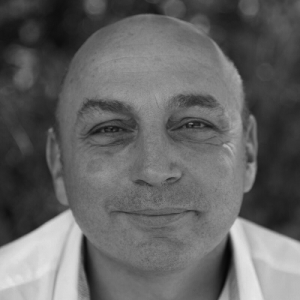
Biologiste aquatique de formation ayant effectué son doctorat sur les plantes aquatiques des rives du Léman sous la direction du Prof. Jean-Bernard Lachavanne, Anthony Lehmann s’est très rapidement passionné sur l’apport des outils cartographiques et statistiques à l’analyse de notre environnement. Il a fait un postdoctorat en Nouvelle-Zélande sur les fougères, puis a travaillé au Centre Suisse de Cartographie de la Faune à Neuchâtel, avant de revenir à l’Université de Genève, détaché au Programme des Nations Unies pour l’Environnement. Il est actuellement professeur associé à l’Université de Genève, vice-directeur de l’Institut des Sciences de l’Environnement où il dirige le laboratoire enviroSPACE qui explore diverses solutions pour mieux comprendre et gérer les ressources naturelles dans une perspective plus durable (www.unige.ch/envirospace).
Expert invité au Transition Workshop depuis 2021.
Aquatic biologist by training who completed his doctorate on the aquatic plants of the shores of Lake Geneva under the supervision of Prof. Jean-Bernard Lachavanne, Anthony Lehmann very quickly became passionate about the contribution of cartographic and statistical tools to the analysis of our environment. He did a post-doctorate in New Zealand on ferns, then worked at the Swiss Center for Wildlife Cartography in Neuchâtel, before returning to the University of Geneva, seconded to the United Nations Environment Program. He is currently associate professor at the University of Geneva, vice-director of the Institute of Environmental Sciences where he directs the enviroSPACE laboratory which explores various solutions to better understand and manage natural resources in a more sustainable perspective (www. .unige.ch/envirospace).
Expert invité au Transition Workshop depuis 2021.
Bibliographie:
- Fasel, M., Brethaut, C., Rouholahnejad, E., Lacayo-Emery, M.A., and Lehmann, A., 2016, Blue water scarcity in the Black Sea catchment: Identifying key actors in the water-ecosystem-energy-food nexus: Environmental Science & Policy, v. 66, p. 140-150.
- Gago Da Silva, A., Ray, N., and Lehmann, A., 2017, Spatial Dynamic Modelling of Future Scenarios of Land Use Change in Vaud and Valais, Western Switzerland: International Journal of Geo-Information, v. 6, no. 115.
- Honeck, E.C., Moilanen, A., Guinaudeau, B., Wyler, N., Schlaepfer, M., Martin, P., Sanguet, A., Urbina, L., von Arx, B., Massy, J., Fischer, C., and Lehmann, A., 2020, Implementing Green Infrastructure for the Spatial Planning of Peri-Urban Areas in Geneva, Switzerland: Sustainability, v. 12, no. 4, p. 1387.
- Lehmann, A., Chaplin-Kramer, R., Lacayo-Emery, M.A., Giuliani, G., Thau, D., Koy, K., Goldberg, G., and Sharp Jr., R., 2017, Lifting the Information Barriers to Address Sustainability Challenges with Data from Physical Geography and Earth Observation: Sustainability, v. 9, no. 5, p. 858.
- Lehmann, A., Giuliani, G., Mancosu, E., Abbaspour, K.C., Sözen, S., Gorgan, D., Beel, A., and Ray, N., 2015, Filling the gap between Earth observation and policy making in the Black Sea catchment with enviroGRIDS: Environmental Science & Policy, v. 46, p. 1-12.
- Lehmann, A., Guigoz, Y., Ray, N., Mancosu, E., Abbaspour, K., Rouholahnejad, E., Allenbach, K., De Bono, A., Fasel, M., Gago Da Silva, A., Bär, R., Lacroix, P.M.A., and Giuliani, G., 2017, A web platform for landuse, climate, demography, hydrology and beach erosion in the black sea catchment: Scientific Data, v. 4, no. 170087.
- Lehmann, A., Maso, J., Nativi, S., and Giuliani, G., 2020, Towards integrated essential variables for sustainability: International Journal of Digital Earth, v. 13, no. 2, p. 158-165.
- Lehmann, A., Timoner, P., Fasel, M., Lacayo-Emery, M.A., Ashraf Vaghefi, S.S., and Abbaspour, K.C., 2019, SWATCH21: a project for linking eco-hydrologic processes and services to aquatic biodiversity at river and catchment levels: Ecohydrology and Hydrobiology, v. 19, no. 2, p. 182-197.
- Maggini, R., Lehmann, A., Zbinden, N., Zimmermann, N.E., Bolliger, J., Schröder, B., Foppen, R., Schmid, H., Beniston, M., and Jenni, L., 2014, Assessing species vulnerability to climate and land use change: the case of the Swiss breeding birds: Diversity and Distributions, v. 20, no. 6, p. 708-719.
- Timoner, P., Marle, P., Castella, E., and Lehmann, A., 2020, Spatial patterns of mayfly, stonefly and caddisfly assemblages in Swiss running waters in the face of global warming: Ecography.

René
Longet
Pionnier de l’écologie dès les années 1970, et en parallèle de ses début en politique, René Longet
s’engage également pour les droits des peuples autochtones. Membre du parti socialiste, il accède
au Conseil national (1982) où il se distingue par son combat antinucléaire. Maire de la ville d’Onex
entre 1999 et 2011, il a aussi été entre autres rédacteur pour le WWF suisse, membre de la délégation
suisse aux sommets mondiaux de l’ONU du développement durable et siège au conseil d’administration
des SIG depuis 2012.
Pioneer of ecology since the 1970s, and in parallel with his beginnings in politics, René Longet is also committed to the rights of indigenous peoples. Member of the Socialist Party, he acceded to the National Council (1982) where he distinguished himself by his anti-nuclear fight. Mayor of the town of Onex between 1999 and 2011, he was also an editor for the Swiss WWF, member of the delegation Switzerland at the UN World Summits on Sustainable Development and sits on the Board of Directors GIS since 2012.
Marie-Antoinette
Mélières
Michel
Meyer
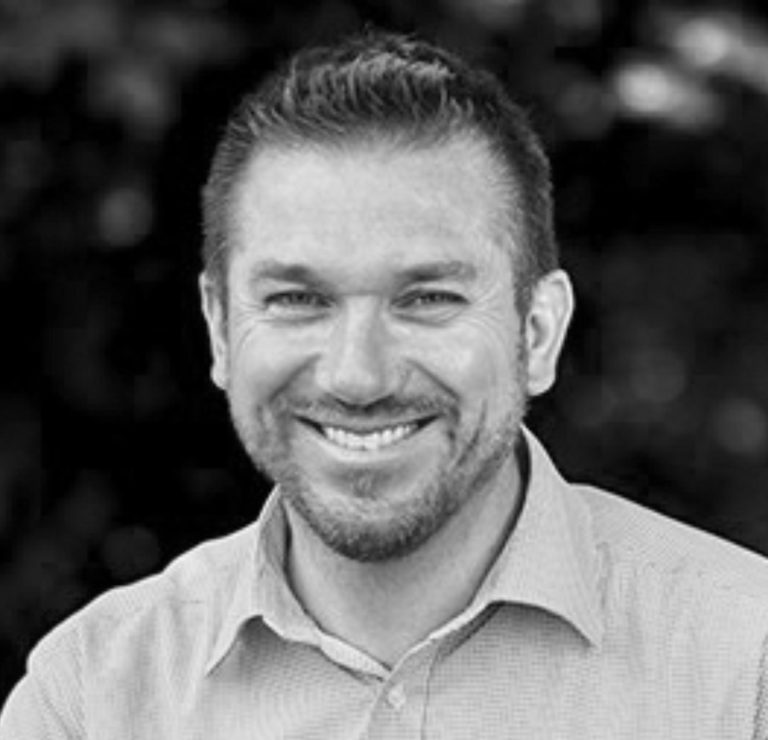
Avant de devenir responsable du développement de la géothermie pour les SIG, Michel Meyer a
été directeur du service de géologie sols et déchets (GESDEC) du Canton de Genève et géologue
cantonal, où il était en charge de l’application des bases légales dans les thèmes de l’hydrologie,
des sites pollués, des gravières et décharges, des dangers naturels, de la protection des sols et de
la gestion des déchets.
Before becoming responsible for the development of geothermal energy for the GIS, Michel Meyer
was director of the soil and waste geology service (GESDEC) of the Canton of Geneva and geologist
cantonal, where he was in charge of the application of the legal bases in the themes of hydrology,
polluted sites, gravel pits and landfills, natural hazards, soil protection and Waste Management.
Yupar
Myint
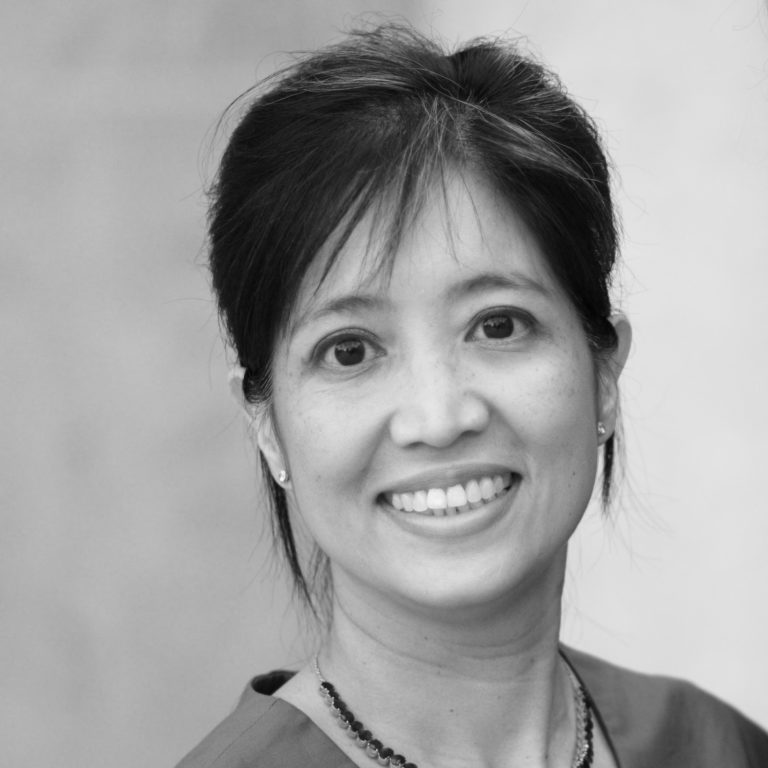
Yupar Myint a plus de 18 ans d'expérience dans la création de programmes d'entrepreneuriat et de collaborations internationales. Elle est actuellement responsable de l'entrepreneuriat au Maxwell Centre de l'Université de Cambridge. Elle est également mentor et directrice de programme à l'école d'été IECT Hermann Hauser, en Autriche. Elle était auparavant directrice de programme et directrice du développement international à CfEL, Cambridge Judge Business School. Elle s'intéresse particulièrement au rôle du capital social dans le développement des compétences et de l'esprit d'entreprise, la création d'idées novatrices et de nouvelles entreprises. Elle a développé une méthodologie largement utilisée pour analyser les clusters d'entrepreneuriat. Elle a obtenu son MBA de la Cambridge Judge Business School, Université de Cambridge, Royaume-Uni en 2002.
Invité expert au Transition Workshop depuis 2022.
Yupar Myint has more than 18 years of experiences in building up entrepreneurship programmes and international collaborations.She is currently Head of Entrepreneurship at the Maxwell Centre, University of Cambridge. She also serves as a mentor and Programme Director at the IECT Hermann Hauser Summer School, Austria.She was previously a Programme Director and Director of International Development at CfEL, Cambridge Judge Business School. She has a special interest in the role of social capital in developing entrepreneurial skills/ mind sets, the creation of innovative ideas and new ventures. She has developed a widely used methodology for analysing entrepreneurship clusters. She has her MBA from Cambridge Judge Business School, University of Cambridge, UK in 2002.
Guest expert at Transition Workshop since 2022.
Johannes
Novy
Martine
Rebetez
Sarah
Schalles
Martin
Schlaepfer
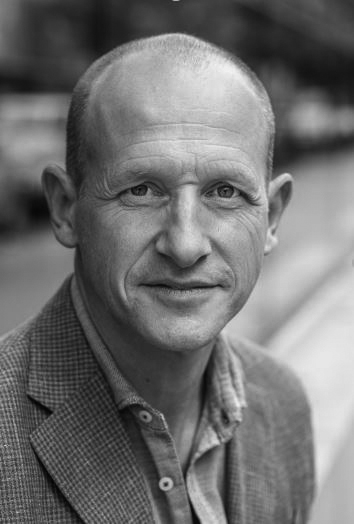
Martin A. Schlaepfer est maître de conférences en biodiversité et durabilité à l'Université de Genève, en Suisse. Ses intérêts de recherche portent sur l'évaluation de la nature et de la biodiversité pour la conservation, avec un accent récent sur les arbres et les espèces non indigènes.
Expert invité au Transition Workshop depuis 2021.
Martin A. Schlaepfer is a Senior Lecturer in Biodiversity and Sustainability at the University of Geneva, Switzerland. His research interests are in the valuation of nature and biodiversity for conservation, with a recent focus on trees and non-native species.
Guest expert at Transition Workshop since 2021.
Bibliographie:
- Büscher, B., Fletcher, R., 2020. The Conservation Revolution. Verso, London.
- Dao, H., Peduzzi, P., Friot, D., 2018. National environmental limits and footprints based on the Planetary Boundaries framework: The case of Switzerland. Global Environmental Change 52, 49-57.
- Frischknecht, R., Nathani, C., Alig, M., Stolz, P., Tschümperlin, L., Hellmüller, P., 2018. Empreintes environnementales de la Suisse. De 1996 à 2015. Résumé, Bern.
- Gomez-Baggethun, E., Barton, D.N., 2013. Classifying and valuing ecosystem services for urban planning. Ecological Economics 86, 235-245.
- Hickel, J., 2020. The sustainable development index: Measuring the ecological efficiency of human development in the anthropocene. Ecological Economics 167.
- Honeck, E., Moilanen, A., Guinaudeau, B., Wyler, N., Schlaepfer, A.M., Martin, P., Sanguet, A., Urbina, L., von Arx, B., Massy, J., Fischer, C., Lehmann, A., 2020. Implementing Green Infrastructure for the Spatial Planning of Peri-Urban Areas in Geneva, Switzerland. Sustainability 12.
- Kubiszewski, I., Costanza, R., Franco, C., Lawn, P., Talberth, J., Jackson, T., Aylmer, C., 2013. Beyond GDP: Measuring and achieving global genuine progress. Ecological Economics 93, 57-68.
- Partidario, M.R., Gomes, R.C., 2013. Ecosystem services inclusive strategic environmental assessment. Environmental Impact Assessment Review 40, 36-46.

Dirk
Sijmons
Architecte paysagiste, fondateur de H+N+S Landscape Architects
Dirk Sijmons (1949), architecte paysagiste, a étudié à l'Université de technologie de Delft. Il a travaillé à l'unité de conservation de la nature du ministère de la Culture, des Loisirs et du Travail social de 1977 à 1981. De 1981 à 1984, il a été chef de l'unité de développement de la politique stratégique et de coordination de la recherche du ministère de l'Agriculture, de la Gestion de la nature et de la Pêche. De 1984 à 1990, il a dirigé le Département d'architecture paysagère de la Commission néerlandaise des forêts. De 1990 à 1993, il a été coordinateur du programme d'études d'architecture paysagère de l'Académie d'architecture d'Amsterdam. En 1990, il était l'un des trois fondateurs de H+N+S Landscape Architects. Chez H+N+S, il est principalement responsable des plans régionaux.
Expert invité au Transition Workshop 2022.
Landscape architect, founder of H+N+S Landscape Architects
Dirk Sijmons (1949), landscape architect, studied at Delft University of Technology. He worked at the Nature Conservation unit of the Ministry of Culture, Recreation and Social work from 1977 until 1981. From 1981 until 1984 he was head of the strategic policy development and research coordination unit of the Ministry of Agriculture, Nature Management and Fisheries. From 1984 until 1990 he was head of the Landscape Architecture Department of the Dutch Forestry Commission. From 1990 until 1993 he was coordinator of the Landscape Architecture study program of the Academy of Architecture in Amsterdam. In 1990 he was one of the three founders of H+N+S Landscape Architects. At H+N+S he is mainly responsible for regional plans.
Guest expert at the Transition Workshop 2022

Michèle
Tranda-Pittion
Michèle Tranda-Pittion est architecte EPFL et titulaire d’un doctorat en art de bâtir et urbanisme de l’Université de Louvain-la-Neuve. Chargée de cours à l’UNIGE, elle enseigne « le design et la conduite des projets de territoire » et partage le suivi des étudiants lors du premier atelier de projets territoriaux du Master en développement du territoire (MDT). Elle est par ailleurs responsable du bureau TOPOS urbanisme à Genève.
Tutrice au Transition Workshop depuis 2020.
Experte pour la Consultation Grand Genève.
Michèle Tranda-Pittion is an EPFL architect and holds a doctorate in the art of building and urban planning from the University of Louvain-la-Neuve. Lecturer at UNIGE, she teaches "the design and management of territorial projects" and shares the follow-up of students during the first territorial project workshop of the Master in Territorial Development (MDT). She is also responsible for the TOPOS urban planning office in Geneva.
Tutor at Transition Workshop since 2020.
Expert for Greater Geneva Consultation.
Marjolein
Visser
Mathis
Wackernagel
Membre du Conseil Scientifique (ECP) depuis 2021.
Expert invité à Transition Workshop depuis 2020.
Mathis Wackernagel est co-créateur de l'empreinte écologique et président de Global Footprint Network. Il a complété un doctorat. en planification communautaire et régionale avec le professeur William Rees à l'Université de la Colombie-Britannique, où sa thèse de doctorat a développé le concept d'empreinte écologique.
Mathis a également obtenu un diplôme d'ingénieur en mécanique de l'Ecole polytechnique fédérale de Suisse. Mathis a travaillé sur le développement durable avec des gouvernements, des entreprises et des ONG internationales sur six continents et a donné des conférences dans plus d'une centaine d'universités. Auparavant, il a été directeur du programme de développement durable chez Redefining Progress à Oakland, en Californie, et a dirigé le Centro de Estudios para la Sustentabilidad à l'Université Anáhuac à Xalapa, au Mexique.
Mathis est l'auteur et a contribué à plus de 50 articles évalués par des pairs, de nombreux articles, rapports et divers livres sur la durabilité qui se concentrent sur le respect des limites des ressources et le développement de mesures de durabilité, notamment Our Ecological Footprint: Reducing Human Impact on the Earth; Partager l'intérêt de la nature ; Der Footprint: Die Welt neu vermessen; Empreinte écologique : gérer notre budget de biocapacité ; et le Rapport Planète Vivante du WWF International.
Les prix de Mathis incluent le prix mondial de la durabilité 2018, le prix IAIA Global Environment 2015, étant intronisé au Temple de la renommée de la durabilité ISSP 2014, le prix Nature Swisscanto 2013, le prix Blue Planet 2012, le prix Binding 2012 pour la conservation de la nature, le prix Kenneth E. Boulding Memorial Award de l'International Society for Ecological Economics, le prix international Zayed pour l'environnement 2011 (co-décerné avec le PNUE), un doctorat honorifique de l'Université de Berne en 2007, un prix Skoll 2007 pour l'entrepreneuriat social, le prix WWF 2006 pour la conservation Mérite et prix Herman Daly 2005 de la US Society for Ecological Economics. Il a également été sélectionné comme numéro 19 sur la liste en (riche) identifiant les 100 personnes les plus inspirantes dont les contributions enrichissent les voies vers un avenir durable (www.enrichlist.org). John Elkington a identifié Mathis parmi le tableau d'honneur "Zeronaut 50", c'est-à-dire les pionniers de premier plan qui résolvent les problèmes les plus importants du monde à zéro. De 2011 à 2015, Mathis a également été professeur invité de la classe Frank HT Rhodes de 1956 à l'Université Cornell.
Member of the Scientific Council (ECP) since 2021.
Guest Expert at Transition Workshop since 2020.
Mathis Wackernagel is co-creator of the Ecological Footprint and President of Global Footprint Network. He completed a Ph.D. in community and regional planning with Professor William Rees at the University of British Columbia, where his doctoral dissertation developed the Ecological Footprint concept. Mathis also earned a mechanical engineering degree from the Swiss Federal Institute of Technology.
Mathis has worked on sustainability with governments, corporations and international NGOs on six continents and has lectured at more than a hundred universities. He previously served as director of the Sustainability Program at Redefining Progress in Oakland, California, and ran the Centro de Estudios para la Sustentabilidad at Anáhuac University in Xalapa, Mexico. Mathis has authored and contributed to more than 50 peer-reviewed papers, numerous articles, reports and various books on sustainability that focus on embracing resource limits and developing metrics for sustainability, including Our Ecological Footprint: Reducing Human Impact on the Earth; Sharing Nature’s Interest; Der Footprint: Die Welt neu vermessen; Ecological Footprint: Managing Our Biocapacity Budget; and WWF International’s Living Planet Report.
Mathis’ awards include the 2018 World Sustainability Award, the 2015 IAIA Global Environment Award, being a 2014 ISSP Sustainability Hall of Fame Inductee, the 2013 Prix Nature Swisscanto, 2012 Blue Planet Prize, 2012 Binding Prize for Nature Conservation, the 2012 Kenneth E. Boulding Memorial Award of the International Society for Ecological Economics, the 2011 Zayed International Prize for the Environment (jointly awarded with UNEP), an honorary doctorate from the University of Berne in 2007, a 2007 Skoll Award for Social Entrepreneurship, 2006 WWF Award for Conservation Merit and 2005 Herman Daly Award of the U.S. Society for Ecological Economics. He was also selected as number 19 on the en(rich) list identifying the 100 top inspirational individuals whose contributions enrich paths to sustainable futures (www.enrichlist.org). John Elkington identified Mathis among the “Zeronaut 50” Roll of Honor, i.e., leading pioneers who are driving the world’s most significant problems to zero. From 2011 to 2015, Mathis was also the Frank H. T. Rhodes Class of 1956 Visiting Professor at Cornell University.
Bibliographie:
- Wackernagel, Mathis and Bert Beyers, 2019. Ecological Footprint: Managing the Biocapacity Budget, New Society Publishers, Gabriola Island. https://www.footprintnetwork.org/2019/09/04/18187/ (Italian translation 2020, different German version earlier 2011/2016)
- Bradshaw, Corey J. A. Paul R. Ehrlich, Andrew Beattie, Gerardo Ceballos, Eileen Crist, Joan Diamond, Rodolfo Dirzo, Anne H. Ehrlich, John Harte, Mary Ellen Harte, Graham Pyke, Peter H. Raven, William J. Ripple, Frédérik Saltré, Christine Turnbull, Mathis Wackernagel, Daniel T. Blumstein, 2021, “Underestimating the challenges of avoiding a ghastly future”, Frontiers in Conservation Science / Front. Conserv. Sci. doi: 10.3389/fcosc.2020.615419. https://www.frontiersin.org/articles/10.3389/fcosc.2020.615419/full.
- Wackernagel, Mathis; Laurel Hanscom, Priyangi Jayasinghe, David Lin, Adeline Murthy, Evan Neill, Peter Raven. 2021. “The Significance of Resource Security for Poverty Eradication.” Nature Sustainability (accepted)
- Raven, Peter and Mathis Wackernagel, 2020, Defining Biodiversity will define our long-term success. Plant Diversity. https://doi.org/10.1016/j.pld.2020.06.002
- Wackernagel, Mathis; Lin, David; Evans, Mikel; Hanscom, Laurel; Raven, Peter. 2019. "Defying the Footprint Oracle: Implications of Country Resource Trends." Sustainability 11, no. 7: 2164. https://www.mdpi.com/2071-1050/11/7/2164
- Wackernagel, Mathis, Laurel Hanscom and David Lin (2017) Making the Sustainable Development Goals Consistent with Sustainability. Front. Energy Res. 5:18. doi: 10.3389/fenrg.2017.00018 http://journal.frontiersin.org/article/10.3389/fenrg.2017.00018/full
Key Websites
- footprintnetwork.org — offers, as Global Footprint Network’s main site, all the background on the Ecological Footprint and its applications
- data.footprintnetwork.org — provides all key results for the National Footprint and Biocapacity Accounts on an open data platform
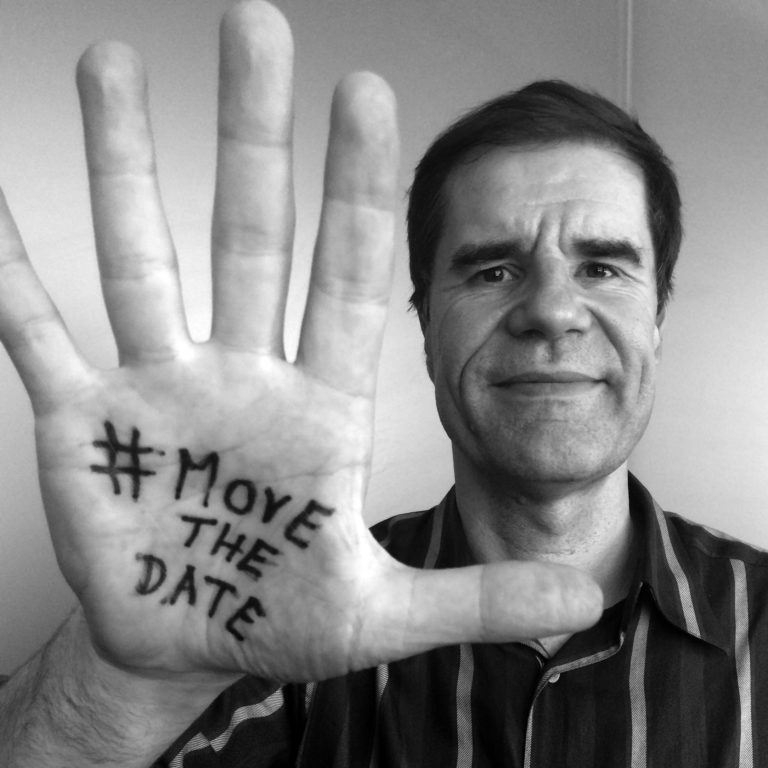
- footprintcalculator.org — allows individuals to estimate their own Footprint and their personal Overshoot Date. Entry point to the #MoveTheDate map
- overshootday.org — hosts Earth Overshoot Day and features solutions to #MoveTheDate
- financefootprint.org — highlights the relevance of Ecological Footprint and related results for the finance industry
- achtung-schweiz.org — applies the Ecological Footprint logic to Switzerland’s competitiveness
- chinafootprint.org and zujiwangluo.org — provide information about the Ecological Footprint in English and Chinese
- FoDaFo.org – Footprint Data Foundation is the newly established, independent organization to host the National Footprint and Biocapacity Accounts. The intent is also to have this data organization be embraced by an alliance of international institutions, as explained at OnePlanetAlliance.org.
Has participated to: